
India’s Historic Labour Code Reform
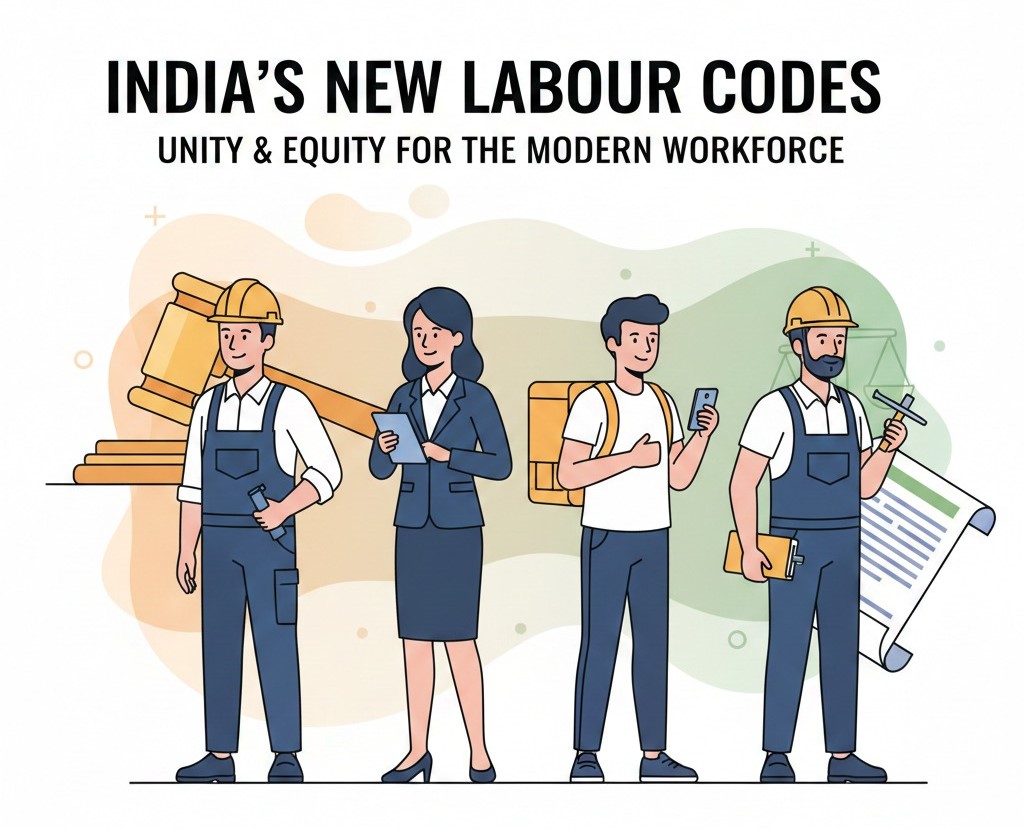
Effective 21 November 2025, the Government of India operationalised four consolidated Labour Codes, each of which had previously received Presidential assent. This step represents a structural transformation of India’s labour law framework, replacing 29 pre-existing central labour enactments with a unified statutory regime.
The objective of this consolidation is threefold: enhancing statutory protections for workers, rationalising compliance obligations for employers, and modernising labour regulation to reflect contemporary workforce realities.
What’s Changed? Quick Takeaways
Four New Codes Now in Force
The reform framework is anchored in four consolidated Labour Codes, each addressing a core pillar of employment regulation:
- Code on Wages, 2019 – Introduces a uniform definition of “wages” and mandates minimum wage protection across all categories of workers, ensuring consistency and transparency in pay structures.
- Industrial Relations Code, 2020 – Establishes a streamlined regulatory regime governing employment contracts, workforce restructuring, layoffs and retrenchments, trade union recognition, and mechanisms for dispute resolution.
- Code on Social Security, 2020 – Significantly expands the social security net by bringing gig workers, platform workers, and segments of the informal workforce within the statutory framework.
- Occupational Safety, Health and Working Conditions Code, 2020 – Consolidates safety, health, and working condition standards into a single, uniform code, enhancing employer accountability and workplace welfare across sectors.
 Why This Reform Matters
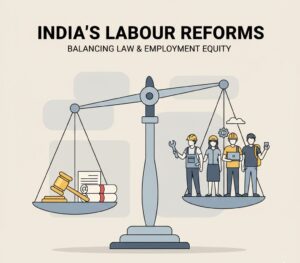
The new Labour Codes are not merely a legislative consolidation; they signal a fundamental shift in how employment is regulated in India.
- Simplification through consolidation: The replacement of 29 fragmented labour statutes with four comprehensive codes significantly reduces regulatory overlap and interpretational ambiguity.
- First-ever universal minimum wage framework: Minimum wage protection is now extended across sectors and categories of workers, creating a uniform wage floor nationwide.
- Social security for the new workforce: Gig and platform workers, such as delivery partners and ride-hailing drivers, are formally recognised and brought within the social security framework for the first time.
- Enhanced workplace safety standards: Employers face heightened health, safety and welfare obligations, backed by consolidated compliance norms.
- Push towards formalisation: Mandatory appointment letters, internal grievance redressal mechanisms, and standardised employment records aim to reduce informality and improve accountability.
Real-World Impact
The practical implications of the Labour Codes are already being felt across industries:
- Gig economy inclusion: Workers on platforms such as Zomato, Swiggy and Uber are now eligible for social security benefits, funded through statutory contributions by aggregators.
- Restructured wage components: Employers are required to ensure that basic wages constitute at least 50% of total CTC, which may temporarily reduce take-home pay due to higher PF contributions, but strengthens long-term retirement benefits.
- Improved safety compliance: Industries must now implement uniform safety protocols, periodic health check-ups and risk-prevention measures, bringing consistency to workplace welfare standards across sectors.
Criticism & Ongoing Debate
Despite their reformative intent, the Labour Codes have also sparked significant opposition:
- Concerns from trade unions: Central unions argue that certain provisions may dilute job security, increase employer discretion, and leave segments of the unorganised workforce inadequately protected.
- Industrial action: These concerns have translated into nationwide protests and strike calls, with demands for rollback or reconsideration of key provisions.
Conclusion
The enactment of the Labour Codes marks a watershed moment in India’s labour law landscape, bringing together decades of fragmented and often overlapping legislation into a cohesive, unified framework. The reforms seek to strengthen worker protections, enhance workplace safety, and accelerate the formalisation of employment in an economy shaped by rapid technological and structural change.
However, legislation is only the first step. The true measure of success will lie in how effectively the Centre and State Governments frame subordinate rules and ensure consistent enforcement, striking a careful balance between ease of doing business and meaningful worker protection.
In this evolving regulatory landscape, legal compliance under the new Labour Codes will demand careful interpretation and timely implementation. Organisations would be well-advised to hire a legal advisor or engage experienced legal counsel to assess the impact of the codes on existing employment structures, wage models, and workplace policies. A dedicated legal compliance advisor can play a critical role in navigating state-specific rules, mitigating regulatory risk, and ensuring that business operations remain aligned with the new statutory framework.