
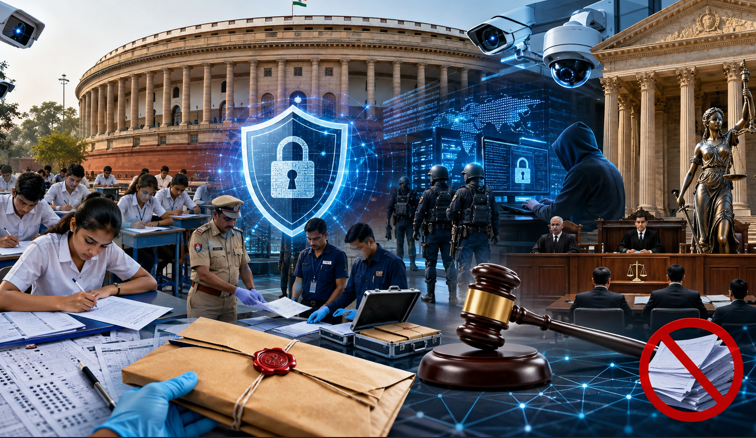
PUBLIC EXAMINATIONS (PREVENTION OF UNFAIR MEANS) (AMENDMENT) BILL, 2026
Parliament has moved to significantly tighten India’s anti-paper leak framework. The Public Examinations (Prevention of Unfair Means) Amendment Bill, 2026 was introduced in the Lok Sabha on 27th July 2026, passed by the Lok Sabha on 29th July 2026, and passed by the Rajya Sabha on 30th July 2026, clearing both Houses of Parliament and now awaiting Presidential assent. The Bill amends the Public Examinations (Prevention of Unfair Means) Act, 2024, and follows a wave of examination malpractice incidents, including the widely reported NEET 2026 paper leak that led to the cancellation and re-conduct of the examination. The amendments introduce steeper penalties, a dedicated investigative task force, time-bound investigation and trial timelines, and Special Fast-Track Courts, marking one of the most consequential tightening of examination-integrity law since the original Act came into force.
1.WHY THIS LAW WAS NEEDED
In 2024, India got its first nationwide law against exam cheating, covering major exam bodies like UPSC, SSC, Railway Recruitment Boards, IBPS, and NTA. Under this law, anyone caught cheating cannot easily get bail, and cases cannot simply be “settled” outside court they have to go through the full legal process.
But even with this law in place, paper leaks, tampering with answer sheets and exam computers, and organized cheating rackets kept happening; the NEET 2026 leak being the worst example, which set off nationwide student protests. So, the government brought in this amendment to close the loopholes, speed up justice, and make cheating far more costly for everyone involved.
2.WHAT’S CHANGING
- Much Harsher Punishments The proposed amendments significantly strengthen the penalties for examination-related offences. Individuals found guilty of using unfair means may now face imprisonment of 5 to 10 years, compared to the earlier 3 to 5 years, along with a maximum fine of ₹50 lakh, increased from ₹10 lakh.Service providers involved in conducting public examinations such as printing agencies, technology vendors, or other operational partners may be subject to fines of up to ₹5 crore (previously ₹1 crore) and may be debarred from participating in government examination processes for 8 years, instead of 4 years. In addition, directors and senior management personnel responsible for such violations may face a minimum imprisonment of 5 years, together with fines of up to ₹5 crore.The amendments also impose the strict consequences on organized examination fraud. Persons involved in organized cheating networks may face a minimum imprisonment of 7 years (earlier 5 years) and a minimum fine of ₹10 crore, marking a substantial increase from the earlier threshold of ₹1 crore.
- A Dedicated Team, With a Deadline The government can now set up a Special Task Force just to investigate exam-cheating cases once it’s formed, this task force takes over the case completely. And there’s a hard deadline: whoever is investigating, whether it’s the police, a central agency, or the task force, must finish within 2 months. in public examination
- Special Fast-Track Courts and Time-Bound Trials Every State Government and Union Territory Administration must set up a Special Fast-Track Court in consultation with the Chief Justice of the concerned High Court to hear offences under the Act. These courts will also hear related offences under the Bharatiya Nyaya Sanhita Act 2023 in the same trial. The cases must be heard on a day-to-day basis unless the court records written reasons for granting an adjournment. The trial must be completed within three months from the date the chargesheet is filed. All pending cases will be transferred to these courts and should also be completed within three months from the date of transfer. Each State must appoint Special Public Prosecutors to conduct these cases. Appeals against the orders of these Fast-Track Courts will be heard directly by a Bench of two judges of the High Court. An appeal must be filed within 30 days although the Court may allow a delay of up to 90 days if justified. As far as possible the High Court should decide the appeal within three months.

3.WHAT THIS MEANS FOR SCHOOLS, EXAM BODIES AND VENDORS
This new law will directly affect exam authorities, testing companies, and institutions that conduct exams. In short:
- Companies that print question papers or manage exam IT systems now risk much bigger fines (up to ₹5 crore) and longer bans (up to 8 years) if something goes wrong on their watch,
- Exam bodies like UPSC, SSC, Railway Recruitment Boards, IBPS, and NTA will likely start screening their vendors more carefully and tightening security checks before hiring them,
- Because investigations must finish in 2 months and trials in 3 months, institutions will face police and legal action much faster after any complaint there’s far less room to quietly sort things out behind closed doors, and
- Company directors and senior managers can now be personally jailed if their firm is involved in cheating, so good governance inside these companies matters more than ever.
Educational institutions that merely host or administer examinations on behalf of these authorities should also expect closer scrutiny of physical security, invigilation protocols, and digital infrastructure, since connected offences under the Bharatiya Nyaya Sanhita will now be tried alongside Act offences in the same fast-tracked proceeding.