
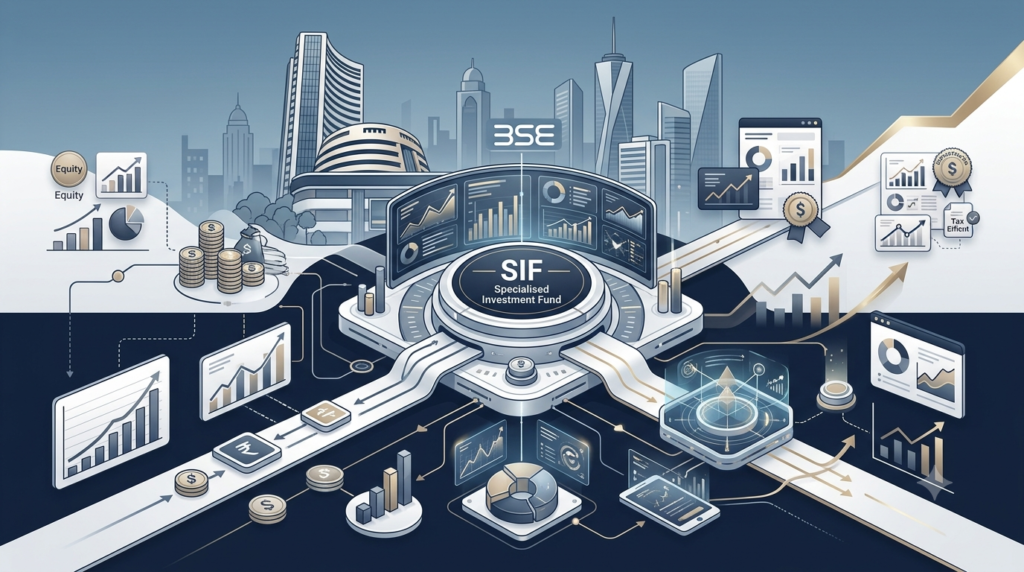
SIF –The Bridge Between Mutual Funds and PMS / AIF
India’s newest investment category and why serious investors should not ignore it
For years, Indian investors have lived in a world of two choices. On one side: mutual funds. Accessible, SEBI-regulated, starting at Rs. 500. Great for the masses but limited in strategy. No derivatives. No complex positioning. No flexibility to go beyond vanilla long-only equity or debt. Designed for everyone, which means optimised for no one in particular.On the other side: PMS and AIF. Institutional-grade strategies. Sophisticated mandates. Derivatives, long-short positions, complex overlays. But with a ticket size of Rs. 50 lakhs to Rs. 1 crore, effectively out of reach for the large and growing segment of serious, informed investors who sit between the two. That gap real, significant, and long ignored now has an answer. SEBI’s Specialised Investment Fund (SIF) is a new regulated investment category designed to occupy precisely that space. It brings institutional-grade strategies including derivatives to investors starting at Rs. 10 lakhs. It is not a tweak to an existing product. It is a genuinely new category. And it changes the investment landscape for everyone from experienced retail investors to seasoned HNIs.
What Is SIF And What Makes It Different?
A Specialised Investment Fund is a new SEBI-regulated vehicle that allows Asset Management Companies (AMCs) the same entities that run your mutual funds to launch strategies that go well beyond what a standard mutual fund is permitted to do. SIF sits between mutual funds and PMS/AIF in terms of flexibility, complexity, and minimum investment. It is managed by AMCs under SEBI oversight so the regulatory familiarity and investor protection of the mutual fund world is preserved but with a significantly expanded investment mandate. The minimum investment is Rs. 10 lakh per investor meaningfully higher than mutual funds, but far more accessible than PMS or AIF. This is deliberate. SIF is designed for investors who have moved beyond the basics and are ready for strategies that traditional mutual funds simply cannot offer.
What’s New -The Expanded Mandate
This is where SIF becomes genuinely exciting for informed investors. The expanded toolkit that SIF fund managers can use includes:
- Derivatives Options & Futures: SIF fund managers can use equity derivatives, futures and options not just for hedging but as part of active strategy. This opens the door to long-short positioning, volatility strategies, and risk-managed equity exposure that standard mutual funds cannot implement.
- Long-Short Strategies: Unlike mutual funds which can only go long (buy and hold), SIF strategies can take short positions profiting from or protecting against falling markets. This is a fundamental shift in what Indian retail-adjacent investors can access.
- Hybrid & Overlay Strategies: SIF can run multi-asset strategies with derivative overlays combinations that were previously only available to Category III AIF investors at Rs. 1 crore minimum.
- SIF gives serious investors access to the kind of strategies that institutional money has always used hedging, derivatives, concentration at a fraction of the entry barrier of PMS or AIF.
Taxation – A Structural Advantage Worth Understanding
One of SIF’s most significant and underappreciated advantages is how it is taxed and more importantly, when.
SIF Taxation – At a Glance
Equity-oriented SIF | STCG: 20% | LTCG: 12.5% (above Rs. 1.25L)
Debt-oriented SIF | STCG: Slab rate | LTCG: Slab rate
Hybrid / Balanced SIF | STCG: 20% | LTCG: 12.5% | Holding: Equity > 65% treated as equity fund
Key advantage over PMS: In PMS, every transaction the fund manager makes triggers a tax event in your hands. In SIF like mutual funds taxation happens only at the time of redemption. This can significantly improve post-tax returns, especially in actively managed, high-churn strategies.
Strategy – How SIF Changes What’s Possible
The investment strategies that become possible inside a SIF structure are a genuine step-change from standard mutual fund investing. Here is what this looks like in practice:
- Equity Long-Short
A SIF can hold long positions in stocks it believes will rise while simultaneously shorting stocks it believes will fall or using index futures to reduce net market exposure. The result is a portfolio that can generate returns in both bull and bear markets, with lower correlation to the broader index than a standard equity fund.
- Derivatives-Based Hedging
Instead of sitting in cash during uncertain markets, a SIF can use put options or short futures to hedge the portfolio maintaining equity exposure while limiting downside. This is what large institutions have always done.
- Concentrated High-Conviction Portfolios
With fewer diversification constraints, SIF fund managers can build 15 to 25 stock portfolios of genuinely high-conviction ideas rather than the 50 to 80 stock portfolios that large mutual funds often carry for compliance reasons. Concentration, when managed well, is where significant alpha lives.
- Multi-Asset with Overlay
A SIF can hold equity, debt, gold, and REITs while using derivatives to dynamically manage the overall risk profile. This is sophisticated asset allocation the kind that was previously only available to large family offices and institutional investors.
Who Should Be Looking at SIF And Why
- For Experienced Retail Investors
If you have been investing in mutual funds for several years, understand market cycles, and feel frustrated by the limitations of standard fund mandates SIF is what you have been waiting for. At Rs. 10 lakhs, it brings genuine strategy sophistication within reach without requiring you to commit Rs. 50 lakhs to a PMS.
- For HNIs Already in PMS or AIF
If you are already invested in PMS, SIF offers a complementary and, in some ways, superior structure. The tax efficiency of mutual-fund-style taxation (taxed at redemption, not at each transaction) can meaningfully improve net returns on active strategies. SIF also allows you to access derivative-based strategies through regulated AMCs with full SEBI oversight.
- For Investors Seeking True Diversification
A portfolio of standard mutual funds, however well-constructed, is essentially a collection of long-only positions. Adding a SIF strategy introduces genuine diversification strategies that behave differently from the market, that can protect in downturns, and that can generate alpha in ways a traditional fund cannot.
Why This Matters Right Now
Indian markets have matured significantly. Retail participation has grown. Investor sophistication measured by awareness of PMS, AIFs, derivatives, and alternative strategies has never been higher. Yet until SIF, the product architecture had not kept pace. The gap between a Rs. 500 mutual fund and a Rs. 50 lakh PMS was real and served no one well not the serious retail investor who had outgrown standard funds, and not the HNI who wanted more flexibility at lower ticket sizes. SIF closes that gap. It is the right product at the right time and investors who understand it early will have access to strategies, structures, and portfolio positioning that the majority of the market cannot yet access. This is an early-mover opportunity in a new and genuinely important investment category.