
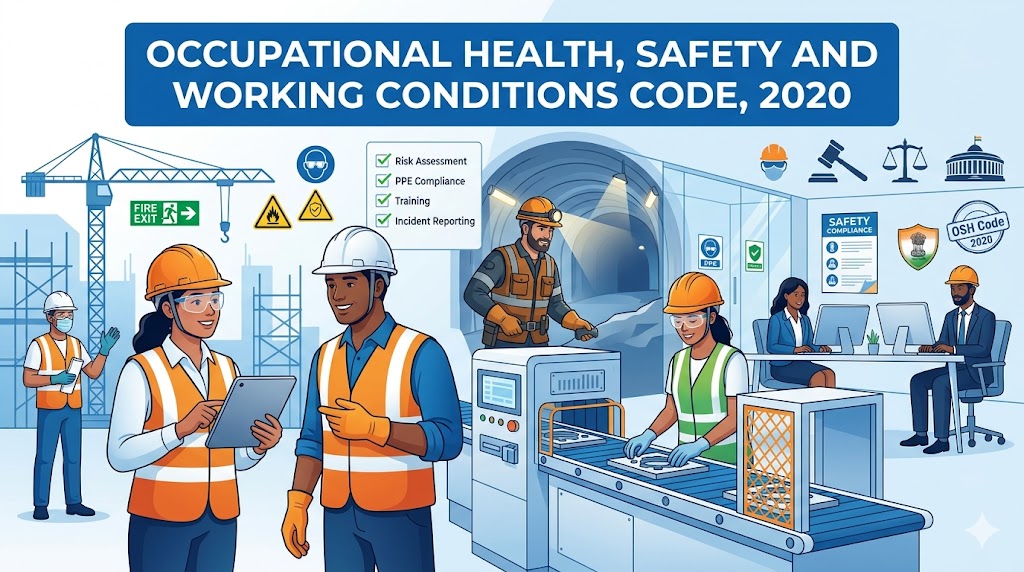
OCCUPATIONAL HEALTH, SAFETY AND WORKING CONDITIONS CODE, 2020
The Occupational Health, Safety and Working Conditions Code, 2020 consolidates and replaces thirteen labour laws relating to safety, health and working conditions of workers employed in various establishments. It aims to ensure safe and healthy working environments across all sectors. It combines the following key legislations:
- The Factories Act, 1948
- The Mines Act, 1952
- The Dock Workers (Safety, Health and Welfare) Act, 1986
- The Building and Other Construction Workers (Regulation of Employment and Conditions of Service) Act, 1996
- The Plantations Labor Act, 1951
- The Contract Labor (Regulation and Abolition) Act, 1970
- The Inter-State Migrant Workmen Act, 1979
- The Working Journalist and Other Newspaper Employees,1955.
- The Sales Promotion Employees Act, 1976
- The Beedi and Cigar Workers (Conditions of Employment) Act, 1966
- The Cine Workers and Cinema Theatre Workers Act, 1981
- The Motor Transport Workers Act, 1961
- The Shops and Establishments Act (as applicable)
The Code applies to all establishments employing ten or more workers, mines, docks, plantations, and other notified sectors, thereby significantly expanding the scope of occupational safety regulation in India.
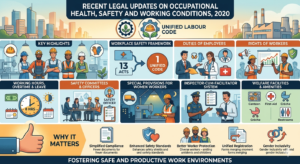
Key Highlights
1. Workplace Safety Framework
The Code consolidates thirteen existing laws into a single unified legislation, simplifying compliance for employers operating across multiple sectors. As per recent legal updates, emphasis has been placed on standardized safety norms and digitized compliance mechanisms.
2. Duties of Employers
Every employer is mandated to provide a safe and healthy workplace free from hazards, ensure availability of adequate welfare facilities, provide necessary safety equipment and personal protective gear, and conduct regular health examinations of workers employed in hazardous processes or operations.
3.Rights of Workers
The Code expressly recognizes the rights of workers, including the right to obtain information about safety and health hazards in the workplace, the right to be protected from retaliation for raising safety concerns, and the right to report unsafe conditions to the Inspector-cum-Facilitator without fear of victimization.
4. Working Hours, Overtime and Annual Leave
The Code prescribes a maximum of eight (8) hours of work per day with provisions for overtime, mandating enhanced wages at twice the ordinary rate for overtime work. It also provides for weekly rest, intervals for rest, and earned leave with wages, standardizing these entitlements across all covered establishments.
5. Safety Committees and Safety Officers
The Code mandates the constitution of Safety Committees in establishments employing 500 or more workers, comprising equal representation of employers and workers. Establishments employing 250 or more workers in hazardous processes are required to appoint qualified Safety Officers, ensuring:
- Proactive identification and mitigation of workplace hazards
- Worker participation in safety management
- Regular review of safety policies and emergency awareness
6. Special Provisions for Women Workers
The Code permits women workers to be employed in all establishments during night hours (between 7:00 PM and 6:00 AM) subject to their consent and subject to conditions of safety, dignity, and transportation as prescribed by the appropriate government. This marks a significant step towards gender equality in workplace participation.
7. Inspector-cum-Facilitator System
The Code introduces the concept of an Inspector-cum-Facilitator, replacing the traditional inspector role with a dual mandate to both inspect establishments for compliance and facilitate employers and workers in understanding and adhering to the provisions of the Code. Web-based inspection scheduling aims to promote transparency and reduce discretionary enforcement.
8. Welfare Facilities and Amenities
The Code mandates provision of welfare amenities including canteens, first-aid facilities, crèches, rest rooms, drinking water, washing facilities, and separate toilet facilities for men and women in establishments meeting specified thresholds. These obligations are exceptional to the size and nature of the establishment.
Why It Matters:
- Consolidates thirteen fragmented laws into a single, comprehensive Code, substantially easing compliance burden for multi-sector employers.
- Enhances workplace safety and health standards across industries.
- Provides better protection and welfare measures for workers, including migrants and contract labour.
- Reduces compliance burden through unified registration and licensing systems.
- Encourages gender inclusivity in employment.
Conclusion
The Occupational Safety, Health and Working Conditions Code, 2020 represents a significant step towards modernizing India’s workplace safety regime. By streamlining multiple laws into a unified framework and emphasizing both compliance and worker welfare, it creates a balanced approach that benefits both employers and employees. Organizations must proactively align their policies and practices with the Code to ensure compliance and foster a safe and productive work environment.